
Use this guide to prepare for the exam, and refer to the official manual for complete details.
Recognizing and obeying traffic control devices is a non-negotiable part of driving. These signs, signals, and markings form a universal language that directs drivers, warns of hazards, and provides essential information, ensuring a safe and orderly flow of traffic. A driver’s ability to instantly understand and correctly respond to these devices is fundamental to passing the driver’s exam and is the cornerstone of defensive, accident-free driving.
Sign Colors and Shapes
The color and shape of a traffic sign provide the first and most important clues to its meaning, often allowing a driver to understand the message even before they can read the text. This system is designed for quick recognition from a distance.
Sign Shapes
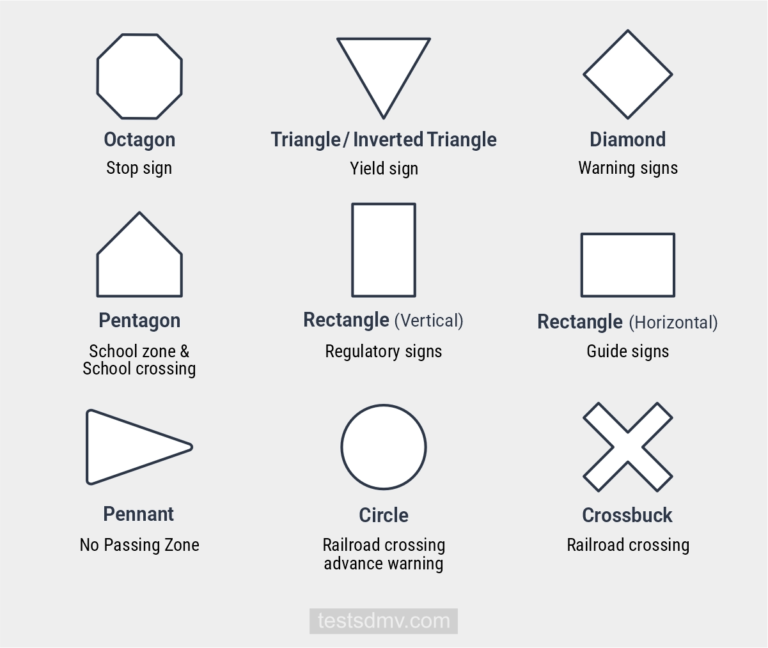
- Octagon (8 sides) — Exclusively used for STOP signs.
- Triangle (downward-pointing) — Exclusively used for YIELD signs.
- Circle — Exclusively used for Railroad Advance Warning signs.
- Pentagon (5 sides) — Used for School Zone and School Crossing signs.
- Rectangle (vertical) — Generally used for Regulatory signs (e.g., Speed Limit).
- Rectangle (horizontal) — Generally used for Guide signs (e.g., directions, destinations).
- Diamond — Used for Warning signs, indicating potential hazards ahead (e.g., curve, slippery road).
- Pennant (sideways triangle) — Used for No Passing Zone warning signs, placed on the left side of the road.
🔒
This is Premium content. Get access to restricted content — extended DMV Tests, Study Guides, and CDL exams.
Get Premium AccessAlready purchased? Log in


