
Use this guide to prepare for the exam, and refer to the official manual for complete details.
Operating a motor vehicle under the influence of alcohol or drugs is one of the most dangerous decisions a driver can make, leading to thousands of preventable deaths and injuries each year. Massachusetts enforces severe penalties for this offense, officially known as Operating Under the Influence (OUI), to deter impaired driving and remove dangerous drivers from the road. Understanding these laws is critical for all drivers, as a conviction carries life-altering consequences, including license loss, fines, and jail time, and the rules are a major focus of the driver’s license exam.
OUI & Implied Consent
In Massachusetts, it is illegal to operate a motor vehicle while under the influence of intoxicating liquor, marijuana, narcotics, intoxicants, or depressants. This is known as Operating Under the Influence (OUI). A driver can be convicted of OUI based on evidence of impairment or by having a Blood Alcohol Concentration (BAC) that is at or above the legal limit.
Blood Alcohol Concentration (BAC) Limits
BAC is the percentage of alcohol in a person’s bloodstream. Massachusetts law establishes per se limits, meaning that having a BAC at or above these levels is, by itself, illegal.
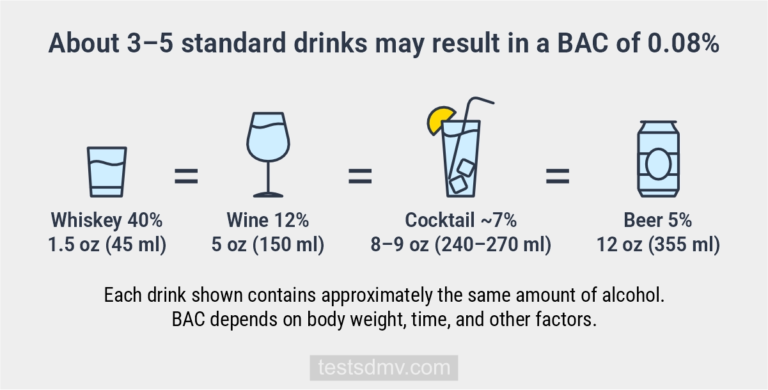
- Drivers 21 and Older: 0.08%
- Drivers Under 21: 0.02% (Zero Tolerance Law)
- Commercial Drivers (CDL): 0.04%
Implied Consent Law
Driving is a privilege, not a right. Under the Implied Consent Law, any person who holds a Massachusetts driver’s license automatically agrees to submit to a chemical test (breath or blood) if arrested for OUI. The purpose of the test is to determine the driver’s BAC.
Penalties for Refusing a Chemical Test
Refusing to take a chemical test results in an immediate and lengthy administrative license suspension from the Registry of Motor Vehicles (RMV). This suspension is separate from and in addition to any criminal penalties a driver may face if later convicted of OUI in court. The length of the refusal suspension depends on the driver’s age and prior OUI record. For a first-time offender over 21, the suspension is 180 days. For a driver under 21, a first-offense refusal results in a three-year suspension.
Massachusetts OUI Penalties
OUI penalties in Massachusetts are divided into two categories that are imposed independently.
🔒
This is Premium content. Get access to restricted content — extended DMV Tests, Study Guides, and CDL exams.
Get Premium AccessAlready purchased? Log in


