
Use this guide to prepare for the exam, and refer to the official manual for complete details.
Traffic signs, signals, and pavement markings form the language of the road, providing a consistent set of rules and warnings that all drivers must understand and obey. This system communicates what to do, where to go, and what potential hazards lie ahead, ensuring a predictable and safe traffic flow. A thorough knowledge of these visual cues is a primary focus of the Illinois written exam and is absolutely essential for safe, everyday driving.
Sign Colors and Shapes
The shape and color of a traffic sign provide the first and most important clue to its meaning. Recognizing these at a glance allows a driver to react quickly and appropriately, even before they can read the sign’s text.
Sign Shapes
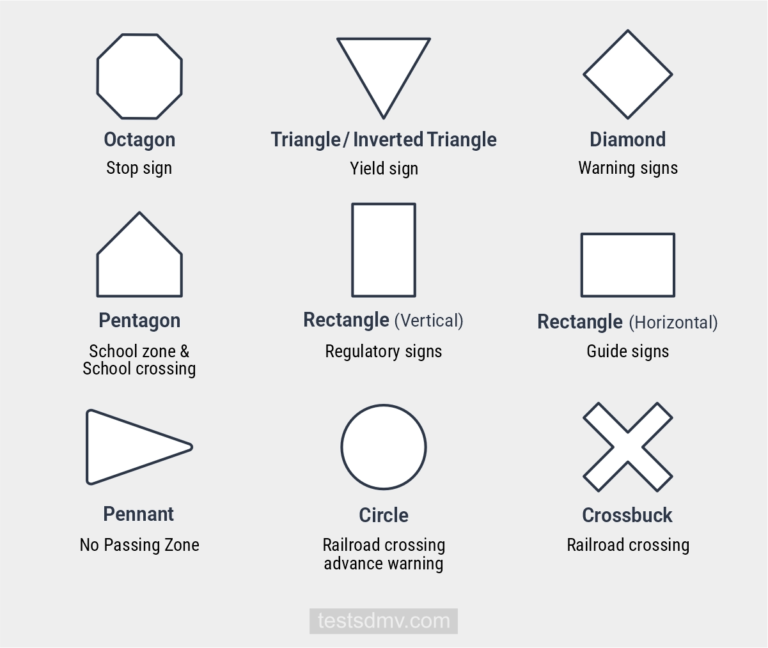
- Octagon (8 sides): Exclusively for STOP signs. You must come to a complete stop.
- Triangle (downward-pointing): Exclusively for YIELD signs. You must slow down and be prepared to stop, yielding the right-of-way to other traffic.
- Round: Exclusively for Railroad Advance Warning signs. It indicates a railroad crossing is ahead.
- Pennant (sideways triangle): Used on the left side of the road to indicate the beginning of a NO PASSING ZONE.
- Diamond: Used for warning signs. These signs alert you to potential hazards or changes in road conditions ahead (e.g., curve, slippery road).
- Pentagon (5 sides): Used for school zone and school crossing signs.
- Rectangle (vertical or horizontal): Used for regulatory signs (e.g., Speed Limit) and guide signs (e.g., route markers, destination signs).
Sign Colors

- Red: Used for STOP, YIELD, and prohibition signs (e.g., DO NOT ENTER, WRONG WAY).
- Yellow: Used for general warning signs, alerting drivers to hazards and road conditions.
- White: Used for regulatory signs, such as Speed Limit, and for route markers.
- Orange: Exclusively for warning signs in construction and maintenance zones.
- Green: Used for guide signs, providing information on destinations, distances, and directions.
- Blue: Used for guide signs indicating services for travelers (e.g., gas, food, lodging, hospitals).
- Brown: Used for signs related to parks and areas of public recreation, cultural, or historical significance.
- Yellow-Green: A fluorescent color used for signs related to pedestrians, bicyclists, and school crossings to increase visibility.
- Pink: A fluorescent color used for incident management signs, providing warnings for traffic incidents like crashes or lane closures.
🔒
This is Premium content. Get access to restricted content — extended DMV Tests, Study Guides, and CDL exams.
Get Premium AccessAlready purchased? Log in


