
Use this guide to prepare for the exam, and refer to the official manual for complete details.
Driving Under the Influence (DUI) is one of the most dangerous and severely punished offenses a driver can commit. Alcohol and drugs impair judgment, coordination, and reaction time, turning a vehicle into a deadly weapon. Understanding Illinois’ strict DUI laws is critical for your safety and the safety of everyone on the road, and this knowledge is a major focus of the driver’s license exam due to the devastating consequences of impaired driving.
DUI & Implied Consent
In Illinois, a driver can be charged with Driving Under the Influence (DUI) for operating a motor vehicle while impaired by alcohol, cannabis (marijuana), other illegal drugs, prescription medications, over-the-counter drugs, or any intoxicating compound that makes them unfit to drive safely. DUI is not limited to just alcohol; any substance that impairs driving ability can lead to a DUI arrest.
Blood Alcohol Concentration (BAC) Limits
BAC is the percentage of alcohol in a person’s bloodstream. Illinois law establishes “per se” BAC limits, meaning that if a driver’s BAC is at or above these levels, they are considered legally intoxicated without any further evidence of impairment.
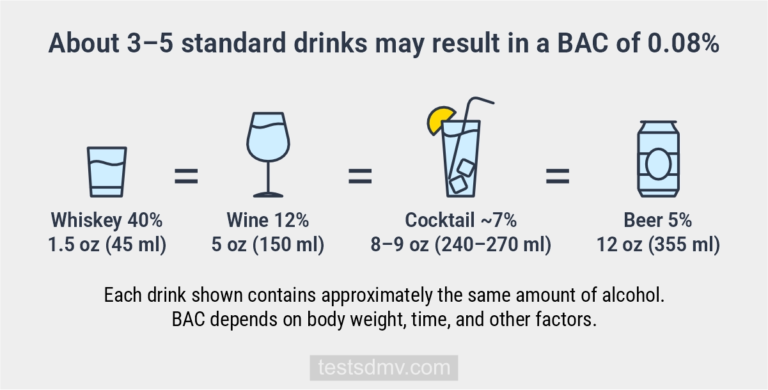
- Drivers Age 21 and Over: It is illegal to drive with a BAC of 0.08% or more.
- Drivers Under Age 21: Illinois has a Zero Tolerance Law. It is illegal for a person under 21 to drive with any trace of alcohol in their system (a BAC greater than 0.00%).
- Commercial Drivers (CDL): It is illegal to operate a commercial motor vehicle with a BAC of 0.04% or more.
- Cannabis (THC): It is illegal to drive with a THC concentration of 5 nanograms or more per milliliter of whole blood or 10 nanograms or more per milliliter of another bodily substance.
Common Mistake:
Believing that you can only get a DUI if your BAC is 0.08% or higher. A driver can be arrested and convicted of DUI with a BAC under 0.08% if they exhibit signs of impairment that prove they are unable to drive safely.
The “Implied Consent” Law
By operating a vehicle on Illinois roadways, a driver automatically gives their consent to submit to chemical testing (breath, blood, or urine) if arrested for DUI. This is known as the Implied Consent Law.
- Refusing a Test: If a driver refuses to submit to chemical testing after a lawful DUI arrest, their driving privileges will be automatically suspended. For a first offense, this suspension is for 12 months.
- Failing a Test: If a driver submits to testing and fails (shows a BAC of 0.08% or higher, or any illegal substance), their driving privileges will be suspended for 6 months for a first offense.
The penalties for refusal are more severe than for failing a test to discourage drivers from refusing.
🔒
This is Premium content. Get access to restricted content — extended DMV Tests, Study Guides, and CDL exams.
Get Premium AccessAlready purchased? Log in


