Use this guide to prepare for the exam, and refer to the official manual for complete details.
Driving under the influence is one of the most dangerous choices a driver can make, leading to thousands of preventable deaths and injuries each year. Understanding Vermont’s strict DUI laws is critical for both the driver’s exam and for personal safety, as the consequences are severe and life-altering. This chapter details the legal definitions, penalties, and responsibilities related to impaired driving to underscore the importance of always driving sober.
DUI & Implied Consent
In Vermont, it is illegal to operate a motor vehicle while under the influence of intoxicating liquor, drugs, or a combination of both. A person can be charged with Driving Under the Influence (DUI) if their ability to drive is impaired to even the slightest degree. This includes impairment from alcohol, illegal drugs, prescription medications, and over-the-counter drugs that can cause drowsiness or affect judgment.
Blood Alcohol Concentration (BAC) Limits
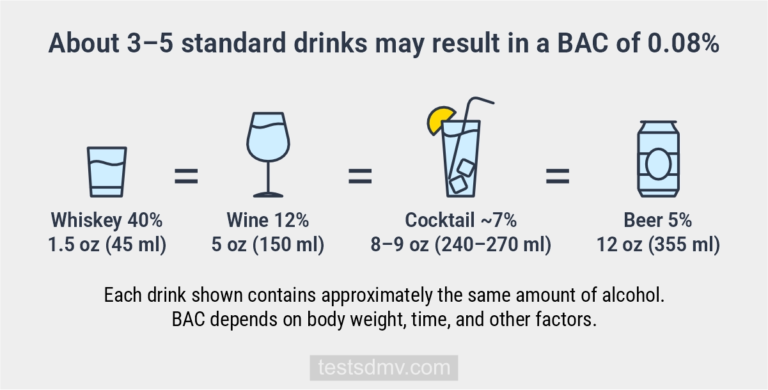
While a driver can be convicted of DUI based on observed impairment alone, Vermont law also establishes specific “per se” BAC limits. Driving with a BAC at or above these levels is automatically illegal, regardless of whether the driver appears intoxicated.
- 21 or Older: 0.08% BAC or higher.
- Under 21: 0.02% BAC or higher. This is a very low threshold, meaning even one drink can put a young driver over the legal limit.
- Commercial Drivers (CDL): 0.04% BAC or higher while operating a commercial vehicle.
🔒 This is Premium content. Get access to restricted content — extended DMV Tests, Study Guides, and CDL exams.
Get Premium AccessAlready purchased? Log in

