
Use this guide to prepare for the exam, and refer to the official manual for complete details.
Driving is a complex task that requires a driver’s full attention, clear judgment, and sharp reflexes. Driving under the influence of alcohol or drugs severely compromises these abilities, creating a significant danger to everyone on the road. Understanding Oklahoma’s strict DUI laws is not just for passing the driver’s exam; it is a critical part of responsible driving that can prevent tragic consequences and severe, life-altering penalties.
DUI & Implied Consent
In Oklahoma, it is illegal to drive, operate, or be in actual physical control of a motor vehicle while under the influence of intoxicants. This offense is known as Driving Under the Influence (DUI). The law is not limited to alcohol; it includes any substance that can impair a person’s mental or physical abilities, including illegal drugs, prescription medications, and over-the-counter drugs.
Blood Alcohol Concentration (BAC) Limits
The primary way intoxication is measured is through Blood Alcohol Concentration (BAC), the percentage of alcohol in the bloodstream. Oklahoma has established “per se” laws, meaning that if a driver’s BAC is at or above a certain level, they are considered legally intoxicated without any further evidence of impairment.
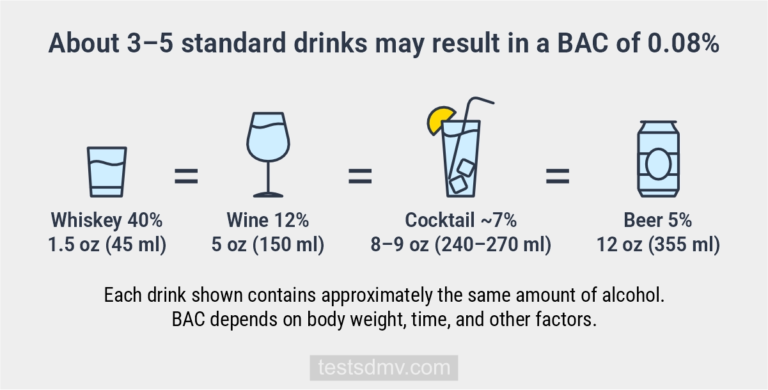
- 21 and Over: It is illegal to drive with a BAC of 0.08% or more.
- Under 21: Oklahoma has a “Zero Tolerance” law. It is illegal for any person under 21 to drive with any measurable amount of alcohol in their system.
- Commercial Drivers: For holders of a Commercial Driver License (CDL), the legal limit is a BAC of 0.04% or more when operating a commercial vehicle.
Additionally, a driver can be charged with Driving While Impaired (DWI) if their BAC is more than 0.05% but less than 0.08%, and there is evidence their driving ability was affected.
🔒
This is Premium content. Get access to restricted content — extended DMV Tests, Study Guides, and CDL exams.
Get Premium AccessAlready purchased? Log in
