Use this guide to prepare for the exam, and refer to the official manual for complete details.
Driving while impaired by alcohol or drugs is one of the most dangerous and reckless decisions a person can make, leading to a significant number of preventable traffic fatalities and serious injuries in North Dakota. These laws are not just administrative rules; they are critical safety measures designed to remove impaired drivers from the road and hold them accountable for the immense risk they pose to the public. A thorough understanding of these laws is vital for all drivers, as the consequences of a DUI are severe, long-lasting, and legally complex.
DUI & Implied Consent
Driving Under the Influence (DUI) in North Dakota is a serious criminal offense. A person can be charged with DUI for operating a motor vehicle while under the influence of intoxicating liquor, drugs (including prescribed, over-the-counter, or illegal substances), or any other substance that renders a person incapable of safely driving. The key factor is impairment, not the legality of the substance consumed.
Blood Alcohol Concentration (BAC)
The primary way law enforcement measures alcohol impairment is through Blood Alcohol Concentration (BAC), which is the percentage of alcohol in a person’s bloodstream. North Dakota has established “per se” BAC limits, meaning that if a driver’s BAC is at or above these levels, they are considered legally impaired without any further evidence needed.
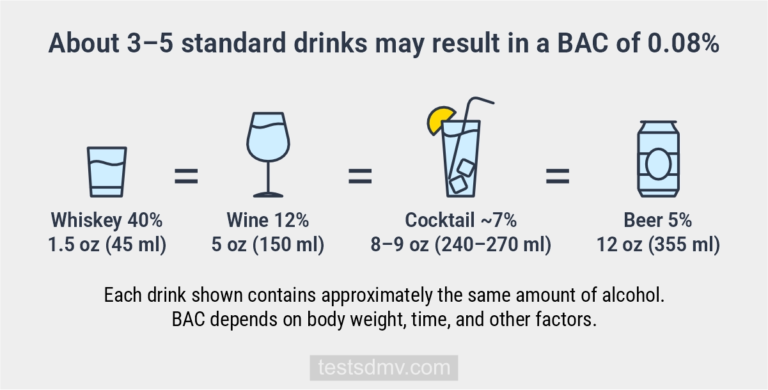
- 21 and Over: It is illegal to drive with a BAC of .08% or higher.
- Under 21: North Dakota has a “zero tolerance” policy. It is illegal for a person under 21 to drive with a BAC of .02% or higher. This low threshold means that even a single drink can result in a DUI charge for a minor.
- Commercial Drivers: For drivers operating a commercial motor vehicle, the legal BAC limit is .04% or higher.
Implied Consent Law
By accepting the privilege of driving in North Dakota, a driver automatically gives their consent to a chemical test of their blood, breath, or urine to determine their BAC or the presence of drugs. This is known as the Implied Consent law. An officer can request a test if they have reasonable grounds to believe a driver is under the influence.
🔒 This is Premium content. Get access to restricted content — extended DMV Tests, Study Guides, and CDL exams.
Get Premium AccessAlready purchased? Log in

