Use this guide to prepare for the exam, and refer to the official manual for complete details.
Knowing how to react in unexpected and high-stress situations, such as a vehicle failure or a traffic stop, is a critical driving skill. This knowledge ensures a driver can maintain control, protect themselves and others, and meet their legal obligations. Understanding these procedures is vital for passing the driver’s license test and for handling real-world challenges on the road safely and responsibly.
Driving involves inherent risks, including mechanical failures and interactions with law enforcement. A prepared driver can navigate these events calmly and correctly, minimizing danger and legal complications.
Vehicle Malfunctions
Even well-maintained vehicles can experience sudden failures. The key to handling them is to avoid panic and follow a clear set of procedures.
Tire Blowout
A blowout is a sudden loss of air pressure that can cause the vehicle to pull sharply to one side.
- Grip the steering wheel firmly with both hands to maintain control. Do not slam on the brakes.
- Ease your foot off the gas pedal. Allow the vehicle to slow down gradually using engine braking.
- Look for a safe place to pull over, such as the shoulder of the road, well away from traffic.
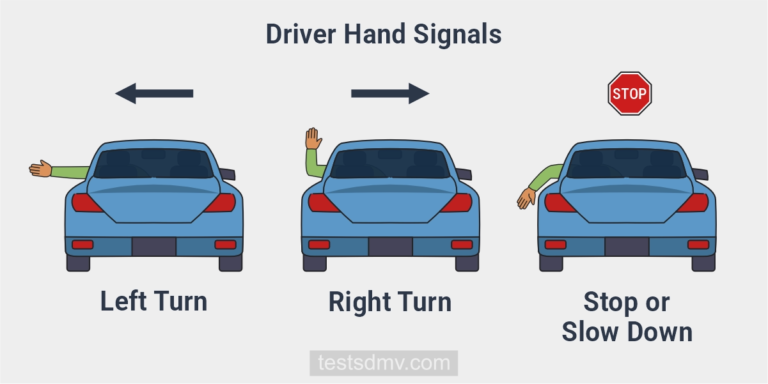
- Signal your intent to move off the highway.
- Once the vehicle has slowed to a safe speed, gently apply the brakes to come to a stop.
- Activate your emergency flashers to warn other drivers.
Common Mistake:
The most dangerous reaction to a tire blowout is slamming on the brakes. This can lock the wheels and cause a complete loss of steering control, potentially leading to a spin or rollover.
🔒 This is Premium content. Get access to restricted content — extended DMV Tests, Study Guides, and CDL exams.
Get Premium AccessAlready purchased? Log in


