Use this guide to prepare for the exam, and refer to the official manual for complete details.
Driving under the influence of alcohol or drugs is one of the most dangerous choices a driver can make, leading to thousands of preventable deaths and injuries each year. West Virginia has strict laws and severe penalties to combat impaired driving and protect the public. Understanding these laws is critical not only for passing the knowledge exam but for recognizing the serious legal and personal consequences of driving while impaired.
DUI & Implied Consent
In West Virginia, a driver can be convicted of Driving Under the Influence (DUI) for operating a motor vehicle while impaired by alcohol, controlled substances, or any other drug that renders them incapable of driving safely. This includes illegal drugs, prescription medications, and even over-the-counter drugs if they affect a driver’s alertness, judgment, or coordination.
Blood Alcohol Concentration (BAC) Limits
The primary way impairment is measured is through Blood Alcohol Concentration (BAC). It is illegal per se (in and of itself) to drive with a BAC at or above a specific limit.
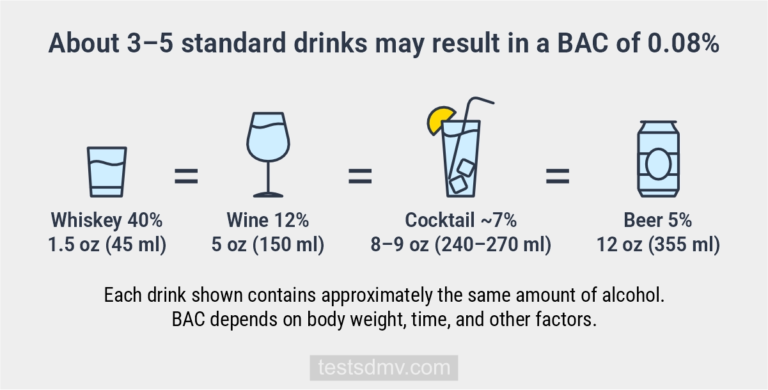
- Drivers 21 and Over: It is illegal to drive with a BAC of 0.08% or higher.
- Drivers Under 21: West Virginia has a “Zero Tolerance” law. It is illegal for anyone under 21 to drive with a BAC of 0.02% or higher. This low threshold means even a single drink can result in a DUI charge.
- Commercial Drivers: It is illegal to operate a commercial vehicle with a BAC of 0.04% or higher.
Common Mistake:
Believing that you are “okay to drive” just because you are below the 0.08% BAC limit is a dangerous assumption. A driver can still be arrested and convicted of DUI with a BAC below 0.08% if their driving shows clear signs of impairment.
🔒 This is Premium content. Get access to restricted content — extended DMV Tests, Study Guides, and CDL exams.
Get Premium AccessAlready purchased? Log in
