Use this guide to prepare for the exam, and refer to the official manual for complete details.
Driving Under the Influence (DUI) of alcohol or drugs is one of the most dangerous actions a driver can take, leading to thousands of preventable deaths and injuries each year. South Dakota enforces strict laws with severe penalties to combat this risk. Understanding these laws is critical for the driver’s license exam, which tests knowledge of BAC limits and implied consent, and for making responsible choices that protect your life, your driving privileges, and the lives of others on the road.
DUI & Implied Consent
In South Dakota, it is a crime for any person to drive or be in actual physical control of a vehicle while under the influence of alcohol, drugs, or a combination of both. Impairment begins with the first drink, affecting judgment, coordination, and reaction time long before a person feels “drunk.”
Blood Alcohol Concentration (BAC) Limits
The state uses Blood Alcohol Concentration (BAC) as the standard measurement for intoxication. A chemical test (breath, blood, or urine) determines this value. It is illegal per se (in and of itself) to operate a vehicle with a BAC at or above the following limits:
- Drivers 21 and Over: 0.08%
- Drivers Under 21: 0.02% (This is known as the “Zero Tolerance” law).
- Commercial Drivers (in a commercial vehicle): 0.04%
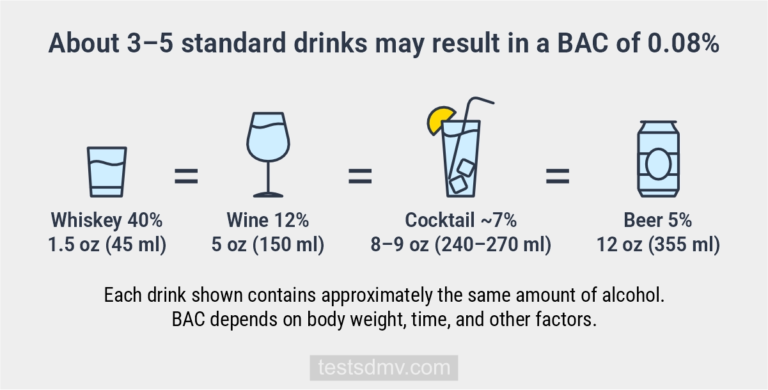
A driver can still be arrested and convicted of DUI with a BAC below 0.08% if a law enforcement officer can demonstrate that the driver’s ability to operate the vehicle was impaired to any degree.
Common Mistake:
Many people believe they cannot be charged with a DUI if they are only taking a legally prescribed medication. This is false. Any substance, legal or illegal, that impairs your ability to drive safely can lead to a DUI arrest and conviction.
🔒 This is Premium content. Get access to restricted content — extended DMV Tests, Study Guides, and CDL exams.
Get Premium AccessAlready purchased? Log in
