Use this guide to prepare for the exam, and refer to the official manual for complete details.
The system of signs, signals, and pavement markings is the universal language of the road, providing vital information, warnings, and commands to every driver. A thorough understanding of this visual language is non-negotiable for safety and is a primary focus of the driver’s knowledge exam. Failing to correctly interpret a sign or signal can lead to confusion, traffic violations, and severe collisions.
Traffic control devices are essential for maintaining an orderly and safe flow of traffic. They are categorized by their function: regulatory signs command action, warning signs alert to hazards, and guide signs provide navigational information. Their colors, shapes, and placement are standardized to allow for instant recognition, giving drivers the time they need to react appropriately.
Sign Colors and Shapes
The color and shape of a traffic sign provide the first and most important clues to its meaning. A driver should be able to recognize the general meaning of a sign from a distance, even before they can read its text, based on these visual cues.
Sign Shapes
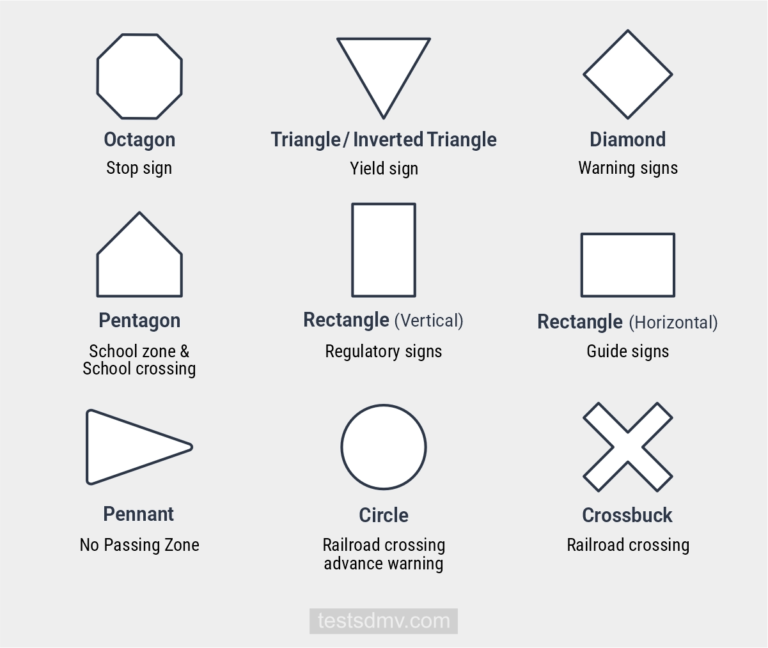
- Octagon (8 sides) — This shape is used exclusively for Stop signs. It means you must come to a full and complete stop.
- Triangle (point down) — This shape is used exclusively for Yield signs. It means you must slow down and be prepared to stop, yielding the right-of-way to other traffic.
- Circle — This shape is used for advance warning of a railroad crossing. It is typically yellow with a black “X” and the letters “RR”.
- Pentagon (5 sides) — This shape indicates a school zone or school crossing ahead.
- Diamond — This shape is used for warning signs. It alerts drivers to potential hazards or changes in road conditions ahead, such as a curve, slippery road, or merging traffic.
- Rectangle (vertical) — This shape is generally used for regulatory signs, such as Speed Limit signs.
- Rectangle (horizontal) — This shape is generally used for guide signs, providing directions or information about services.
- Pennant (sideways triangle) — This shape is posted on the left side of the road to indicate a No Passing Zone.
🔒 This is Premium content. Get access to restricted content — extended DMV Tests, Study Guides, and CDL exams.
Get Premium AccessAlready purchased? Log in

