
Use this guide to prepare for the exam, and refer to the official manual for complete details.
Traffic signs, signals, and pavement markings form the language of the road, providing essential information, commands, and warnings to drivers. Mastering this language is fundamental to safe driving and is a primary focus of the Missouri driver’s license exam. A driver who understands and obeys these devices can anticipate road conditions, navigate safely, and communicate effectively with other road users, preventing confusion and crashes.
In Missouri, all drivers must be able to recognize and obey the various markings, signs, and signals used to regulate, warn, and guide traffic. These devices are standardized by their shape, color, and placement to convey information quickly and clearly. Failure to obey a traffic control device is a moving violation that can result in a ticket, fines, and points on a driver’s record.
Sign Colors and Shapes
The color and shape of a traffic sign provide instant clues about its meaning, allowing drivers to react even before they can read the text.
Sign Shapes
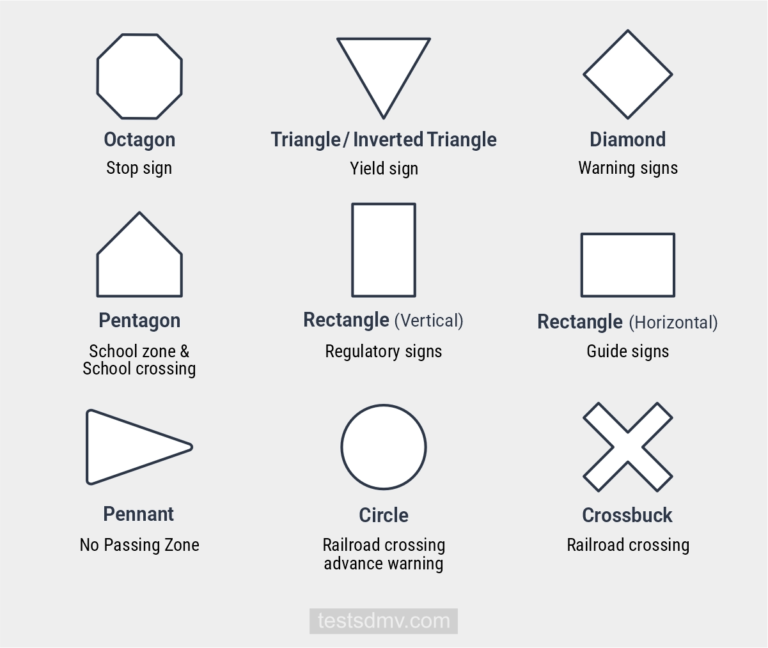
- Octagon (8 sides) — Exclusively for STOP signs. It means you must come to a complete stop before the stop line, crosswalk, or intersection.
- Triangle (downward pointing) — Exclusively for YIELD signs. It means you must slow down and be prepared to stop, yielding the right-of-way to traffic and pedestrians.
- Circle — Exclusively for Railroad Advance Warning signs. It indicates you are approaching a railroad crossing.
- Pennant (sideways triangle) — Used for No Passing Zone signs. It is posted on the left side of the road to warn you not to pass.
- Diamond — Used for general warning signs. These signs alert you to potential hazards or changes in road conditions ahead, such as a curve, slippery road, or merging traffic.
- Pentagon (5 sides) — Used for School Zone and School Crossing signs.
- Vertical Rectangle — Typically used for regulatory signs, such as Speed Limit or No Parking signs.
- Horizontal Rectangle — Typically used for guide signs, which provide directions, route information, and motorist services.
- Crossbuck (X-shape) — Indicates the specific location of a railroad crossing.
Sign Colors

- Red — Used for stop, yield, or prohibition. This color conveys that a driver must stop or that a specific action is forbidden.
- Yellow — Used for general warnings. It alerts drivers to hazards like curves, intersections, or slippery roads.
- Fluorescent Yellow-Green — Used for school zones, pedestrian, and bicycle crossings to increase visibility.
- White — Used for regulatory signs, such as speed limits or lane control.
- Black — Used for regulatory signs and as the background color for one-way street signs.
- Orange — Used for temporary traffic control in construction or work zones.
- Green — Used for guide signs, showing directions, distances, and exits.
- Blue — Used for motorist service signs, indicating the location of services like gas, food, and hospitals.
- Brown — Used for public recreation and cultural interest signs, such as for parks or historical sites.
🔒
This is Premium content. Get access to restricted content — extended DMV Tests, Study Guides, and CDL exams.
Get Premium AccessAlready purchased? Log in


