
Use this guide to prepare for the exam, and refer to the official manual for complete details.
Driving is a privilege that requires sound judgment, sharp reflexes, and full attention. Operating a vehicle while impaired by alcohol or drugs is a reckless decision that can lead to devastating consequences, including severe injury, death, and significant legal and financial penalties. Understanding Missouri’s strict laws against impaired driving is essential for passing the driver’s license exam and, more importantly, for making responsible choices that protect lives.
In Missouri, it is illegal to operate a motor vehicle while in an intoxicated or drugged condition. This offense is commonly known as Driving While Intoxicated (DWI). The law is not limited to alcohol; it includes impairment from illegal drugs, prescription medications, over-the-counter drugs, or any combination of substances that affects a person’s ability to drive safely.
DUI & Implied Consent
A driver can be convicted of DWI based on a law enforcement officer’s observations of impairment or by chemical test results that show an illegal Blood Alcohol Content (BAC).
Blood Alcohol Content (BAC) Limits
BAC is the percentage of alcohol in a person’s bloodstream. Missouri law establishes “per se” limits, meaning that if a driver’s BAC is at or above these levels, they are considered legally intoxicated without further evidence of impairment.
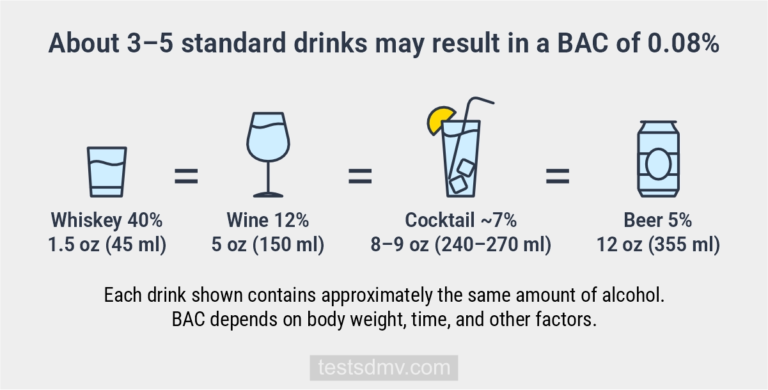
- 21 years of age or older: 0.08% or more
- Under 21 years of age: 0.02% or more (Zero Tolerance Law)
- Commercial Vehicle Drivers: 0.04% or more while operating a commercial vehicle.
Even a small amount of alcohol can impair driving ability. A single drink can affect judgment and reaction time. For most people, two or more drinks within a short period can easily result in a BAC at or above the legal limit.
Implied Consent Law
Under Missouri’s Implied Consent law, any person who operates a vehicle on public roadways has automatically agreed to submit to a chemical test of their breath, blood, or urine if arrested for an alcohol- or drug-related driving offense.
Refusing to take the test has immediate and severe consequences. If a driver refuses a chemical test, their driving privilege is immediately revoked for one year. This revocation is an administrative penalty, separate from any criminal charges the driver may face. The refusal can also be used as evidence against the driver in court.
🔒
This is Premium content. Get access to restricted content — extended DMV Tests, Study Guides, and CDL exams.
Get Premium AccessAlready purchased? Log in


