Use this guide to prepare for the exam, and refer to the official manual for complete details.
Driving Under the Influence (DUI) is one of the most dangerous actions a person can take on the road, responsible for a significant percentage of all traffic fatalities each year. Kentucky has strict laws to combat impaired driving, and understanding them is critical for both passing the driver’s license exam and ensuring personal and public safety. These laws are not just about alcohol; they cover any substance that can impair a driver’s judgment, reaction time, and coordination.
DUI & Implied Consent
In Kentucky, a person is guilty of DUI if they operate or are in physical control of a motor vehicle while under the influence of alcohol, a controlled substance, or any other substance that impairs their driving ability. This is a serious criminal offense with severe consequences, even for a first-time offender.
Blood Alcohol Concentration (BAC) Limits
The state uses Blood Alcohol Concentration (BAC) as a standard measure of intoxication. A driver is considered “per se” intoxicated, meaning no further evidence of impairment is needed for a conviction, if their BAC meets or exceeds certain levels.
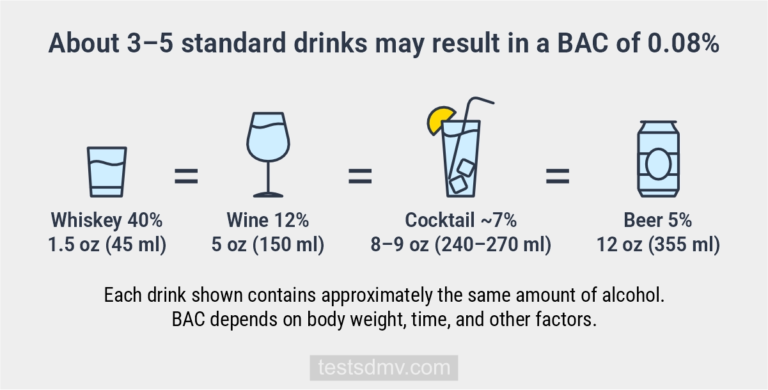
- Drivers 21 and Over: The legal BAC limit is 0.08%.
- Drivers Under 21: Kentucky has a “Zero Tolerance” law. It is illegal for a person under 21 to drive with a BAC of 0.02% or higher.
- Commercial Drivers (CDL): The legal BAC limit is 0.04% when operating a commercial vehicle.
🔒 This is Premium content. Get access to restricted content — extended DMV Tests, Study Guides, and CDL exams.
Get Premium AccessAlready purchased? Log in


