Use this guide to prepare for the exam, and refer to the official manual for complete details.
A driver’s ability to instantly recognize and correctly interpret traffic signs, signals, and pavement markings is fundamental to road safety. These devices form a universal language that directs, warns, and guides drivers, preventing chaos and reducing the risk of crashes. Mastering this visual language is essential for passing the knowledge test and for navigating the roadway system safely and efficiently every day.
Ohio’s roadways are regulated by a system of traffic control devices. These include signs of various shapes and colors, electronic traffic signals, and lines or symbols painted on the pavement. Each element has a specific meaning and must be obeyed at all times.
Sign Colors and Shapes
The color and shape of a traffic sign provide instant information about its purpose, allowing drivers to understand its message even from a distance.
Sign Shapes
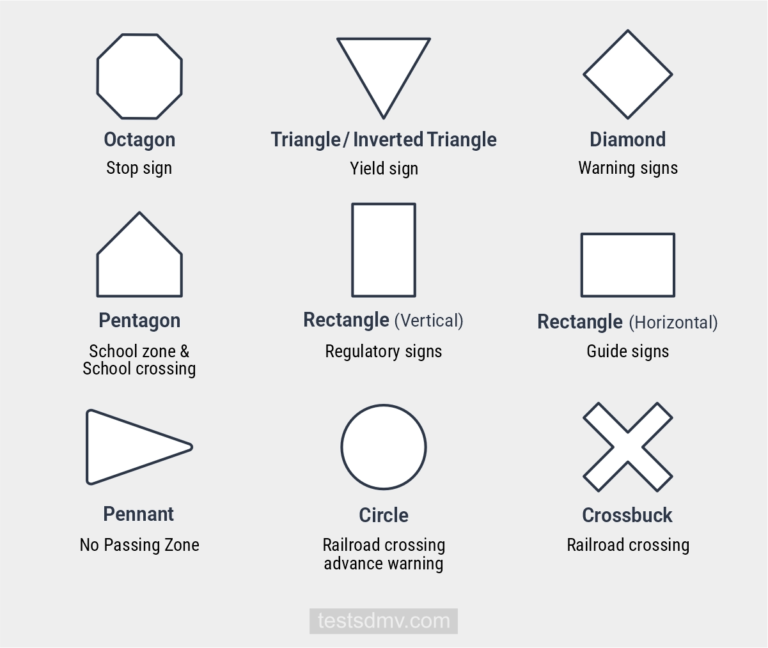
- Octagon (8 sides) — Exclusively for STOP signs. It means you must come to a complete stop.
- Triangle (inverted) — Exclusively for YIELD signs. It means you must slow down and be prepared to stop, yielding the right-of-way to other traffic.
- Circle — Exclusively for Railroad Advance Warning signs. It indicates a railroad crossing is ahead.
- Diamond — Used for warning signs. It indicates potential hazards or changes in road conditions ahead (e.g., curve, slippery road).
- Pentagon (5 sides) — Used for School Zone and School Crossing signs.
- Rectangle (vertical) — Generally used for regulatory signs, such as SPEED LIMIT.
- Rectangle (horizontal) — Generally used for guide signs, providing directions or information.
- Pennant (sideways triangle) — Used for NO PASSING ZONE signs, located on the left side of the road.
Sign Colors

- Red — Used for stop, yield, or prohibition (e.g., DO NOT ENTER). It conveys a need for immediate driver action.
- Black and White — Used for regulatory signs, which state the law (e.g., SPEED LIMIT, ONE WAY).
- Yellow — Used for general warning signs to alert drivers of upcoming hazards or road conditions.
- Orange — Used exclusively for warning signs in construction or work zones.
- Green — Used for guide signs, indicating destinations and distances.
- Blue — Used for guide signs related to motorist services (e.g., gas, food, lodging) and for accessible parking.
- Brown — Used for signs related to public recreation and scenic or cultural interest.
Sign Categories
Traffic signs are grouped into three main categories based on their function.
- Regulatory Signs: These signs inform drivers of traffic laws or regulations and are legally enforceable. They are typically rectangular and white with black lettering, but include iconic signs like the red octagonal STOP sign and the inverted triangle YIELD sign. Examples include SPEED LIMIT, ONE WAY, and NO PARKING signs. A red circle with a slash over a symbol indicates that the action is prohibited (e.g., NO U-TURN).
- Warning Signs: These signs alert drivers to potential hazards or conditions ahead that may require them to slow down or take special precautions. They are almost always yellow and diamond-shaped. Examples include CURVE AHEAD, SLIPPERY WHEN WET, and DEER CROSSING. Orange, diamond-shaped signs are used for warnings within work zones.
- Guide Signs: These signs provide information about routes, destinations, and services. They include route markers (e.g., Interstate, U.S. Route, State Route shields), destination and distance signs (green), and motorist service signs (blue).
🔒 This is Premium content. Get access to restricted content — extended DMV Tests, Study Guides, and CDL exams.
Get Premium AccessAlready purchased? Log in

