
Use this guide to prepare for the exam, and refer to the official manual for complete details.
Driving Under the Influence (DUI) is one of the most dangerous and severely punished offenses a driver can commit. Alcohol and drugs impair judgment, coordination, and reaction time, turning a vehicle into a deadly weapon. Understanding Virginia’s strict DUI laws is not just about passing an exam; it is about recognizing the life-altering legal and personal consequences of a decision that is 100% preventable.
DUI & Implied Consent
In Virginia, a driver can be charged with Driving Under the Influence (DUI), sometimes called Driving While Intoxicated (DWI), for operating a motor vehicle while impaired by alcohol, illegal drugs, prescription medication, or any combination thereof. The key element is impairment; a substance does not have to be illegal to lead to a DUI charge if it affects a person’s ability to drive safely.
Blood Alcohol Concentration (BAC) Limits
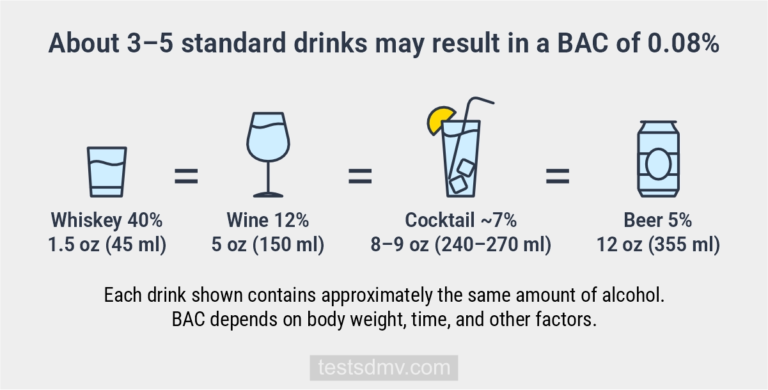
While a driver can be convicted of DUI based on observed impairment alone, Virginia law establishes specific Blood Alcohol Concentration (BAC) levels that are considered per se evidence of intoxication. This means a driver is legally considered under the influence at these levels without further proof of impairment.
🔒
This is Premium content. Get access to restricted content — extended DMV Tests, Study Guides, and CDL exams.
Get Premium AccessAlready purchased? Log in


