
Use this guide to prepare for the exam, and refer to the official manual for complete details.
Driving is a privilege that requires sound judgment and full concentration. Driving under the influence of alcohol or drugs is a reckless decision that severely impairs these abilities, turning a vehicle into a deadly weapon. Understanding Pennsylvania’s strict DUI laws is critical not only for passing your exam but for recognizing the severe legal, financial, and personal consequences of a choice that kills and injures thousands of people every year.
DUI & Implied Consent
In Pennsylvania, a person can be convicted of Driving Under the Influence (DUI) for operating a vehicle after consuming alcohol or drugs to a degree that renders them incapable of safe driving. This is not limited to illegal substances; it includes prescription medications and over-the-counter drugs if they impair driving ability.
Blood Alcohol Concentration (BAC) Limits
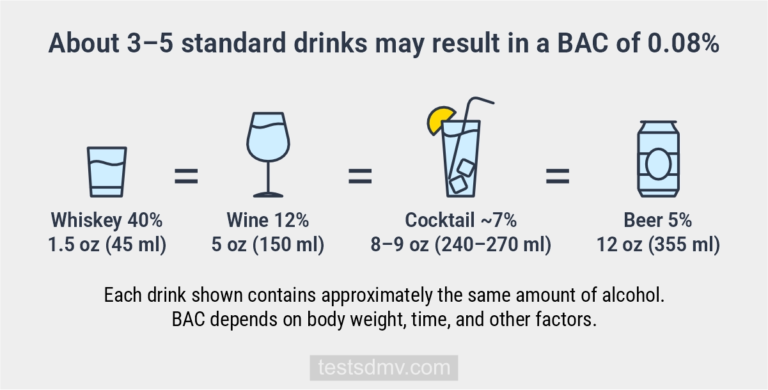
BAC is the primary way impairment is measured. Pennsylvania law establishes specific BAC limits at which a driver is considered legally impaired, or “per se” intoxicated.
🔒 This is Premium content. Get access to restricted content — extended DMV Tests, Study Guides, and CDL exams.
Get Premium AccessAlready purchased? Log in


