
Use this guide to prepare for the exam, and refer to the official manual for complete details.
Driving is a complex task that demands a driver’s full attention and unimpaired judgment. Consuming alcohol or drugs, even in small amounts, severely degrades the critical mental and physical skills required for safe driving, turning a vehicle into a deadly weapon. Understanding Texas’s strict laws against impaired driving is crucial not only for passing the driver’s license exam but for preventing the tragic and life-altering consequences of a DWI conviction.
DWI & Implied Consent
In Texas, the primary offense for impaired driving is Driving While Intoxicated (DWI). A person is considered legally intoxicated if they do not have the normal use of their mental or physical faculties due to alcohol or any other drug, OR if they have a Blood Alcohol Concentration (BAC) of 0.08% or more. This means a driver can be arrested and convicted of DWI even if their BAC is below 0.08%, provided their driving ability is clearly impaired. For minors under 21, the offense is called Driving Under the Influence (DUI).
Blood Alcohol Concentration (BAC) Limits
BAC is the percentage of alcohol in a person’s bloodstream. The legal limits are set by law and are strictly enforced.
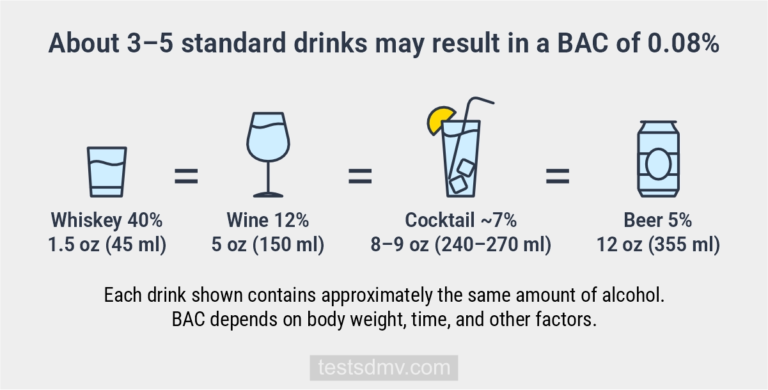
- 21 Years or Older: The legal BAC limit is 0.08%. However, a driver can be charged with DWI at any BAC level if they exhibit impairment.
- Under 21 Years (Zero Tolerance): It is illegal for any person under 21 to operate a motor vehicle with any detectable amount of alcohol in their system.
- Commercial Drivers (CDL): The legal BAC limit is 0.04% when operating a commercial motor vehicle.
🔒
This is Premium content. Get access to restricted content — extended DMV Tests, Study Guides, and CDL exams.
Get Premium AccessAlready purchased? Log in


