
Use this guide to prepare for the exam, and refer to the official manual for complete details.
A driver’s ability to instantly recognize and obey traffic signs, signals, and pavement markings is fundamental to road safety. These devices form a universal language that directs the flow of traffic, warns of potential hazards, and provides essential information. Mastering this visual language is a primary focus of the driver’s knowledge test and a non-negotiable skill for safe, everyday driving.
The roads in Michigan are regulated by a comprehensive system of traffic control devices. These include signs of various shapes and colors, electronic traffic signals, and lines or symbols painted on the pavement. Each element has a specific, consistent meaning that a driver must know and obey at all times.
Sign Colors and Shapes
The color and shape of a traffic sign provide the first and most important clues to its meaning. Recognizing these characteristics allows a driver to understand the message from a distance, even before they can read the text.
Sign Shapes
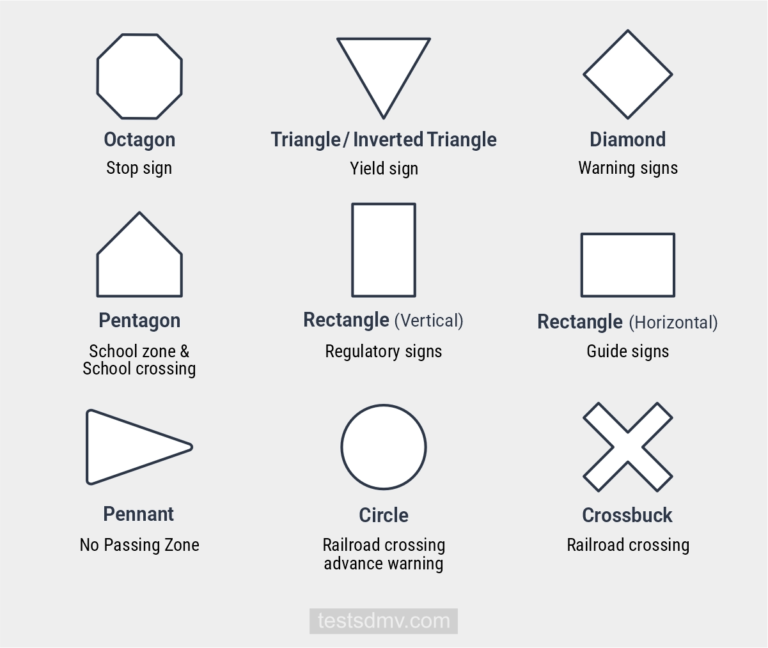
- Octagon (8 sides): This shape is used exclusively for STOP signs. It requires a driver to come to a complete stop and yield the right-of-way before proceeding.
- Triangle (3 sides): This shape, pointing down, is used only for YIELD signs. It requires a driver to slow down, be prepared to stop, and yield the right-of-way to traffic and pedestrians.
- Circle: This shape is used for advance warning of a railroad crossing ahead.
- Pentagon (5 sides): This shape indicates a school zone or school crossing ahead.
- Pennant (sideways triangle): This shape is posted on the left side of the road to indicate the beginning of a NO PASSING ZONE.
- Diamond: This shape is used for warning signs, indicating potential hazards or changes in the road ahead, such as a curve or slippery surface.
- Rectangle (vertical or horizontal): These shapes are used for regulatory signs (e.g., Speed Limit) and guide signs (e.g., route markers, destinations).
🔒 This is Premium content. Get access to restricted content — extended DMV Tests, Study Guides, and CDL exams.
Get Premium AccessAlready purchased? Log in


