
Use this guide to prepare for the exam, and refer to the official manual for complete details.
Understanding the language of the road is non-negotiable for safe driving. Traffic signs, signals, and pavement markings form a universal communication system that directs drivers, warns of hazards, and maintains order. A driver’s ability to instantly recognize and obey these controls is fundamental to preventing confusion and collisions, making this knowledge a critical component of both the driver’s exam and daily safety.
Sign Colors and Shapes
The color and shape of a traffic sign provide the first and most important clues about its meaning. Recognizing these visual cues allows a driver to understand the message even from a distance, before the words or symbols are legible.
Sign Shapes
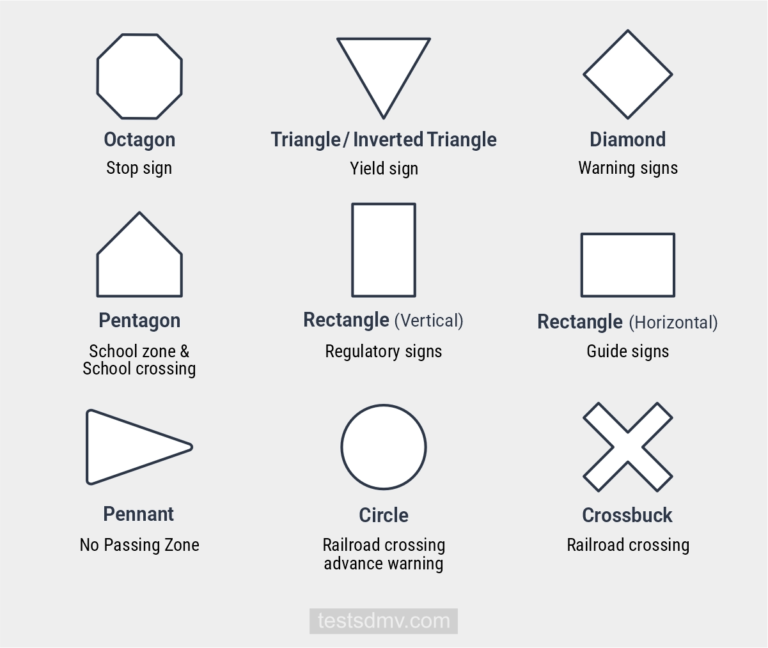
- Octagon (8 sides): Exclusively for Stop signs. This unique shape means a driver must come to a full and complete stop.
- Triangle (points down): Exclusively for Yield signs. This means a driver must slow down and be prepared to stop, yielding the right-of-way to other vehicles and pedestrians.
- Circle: Exclusively for Railroad Advance Warning signs. This sign, usually yellow with a black “X” and “RR,” indicates a railroad crossing is ahead.
- Diamond: Warning signs. These signs alert drivers to potential hazards or changes in road conditions ahead, such as a curve, slippery road, or merging traffic.
- Rectangle (vertical): Regulatory signs. These signs state the law, such as Speed Limit, No Parking, or Keep Right.
- Rectangle (horizontal): Guide signs. These signs provide information about routes, destinations, and points of interest.
- Pentagon (5 sides): School Zone and School Crossing signs. This shape indicates that children may be present and that a lower speed limit may be in effect.
🔒 This is Premium content. Get access to restricted content — extended DMV Tests, Study Guides, and CDL exams.
Get Premium AccessAlready purchased? Log in


